


Rochester Genesee Regional Transportation Authority, New York
2027–2036 Capital Improvement Plan Alert
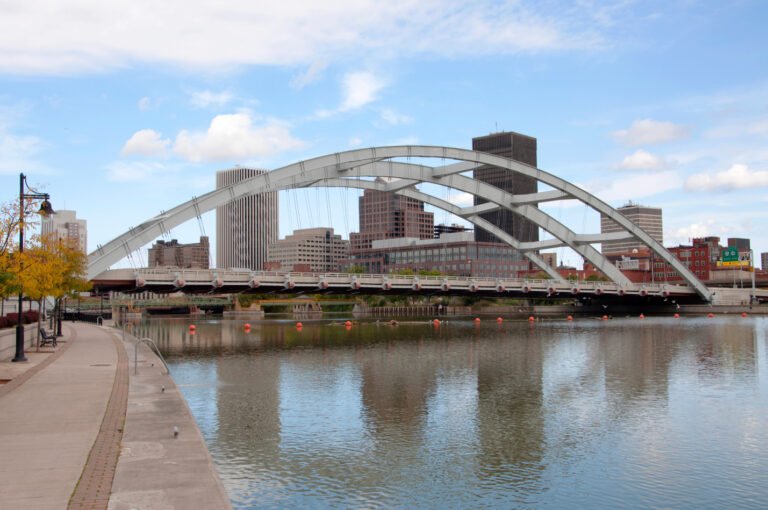
FirmoGraphs tracks public capital improvement plans and transportation investment documents so architecture, engineering, construction, and product teams can spot where spending is growing, where projects are newly introduced, and which agencies are prioritizing major asset replacement cycles.
For Rochester Genesee Regional Transportation Authority (RGRTA), the latest transportation improvement plan points to a larger forward program centered on fleet replacement, preventive maintenance, and significant facility investments, including a hydrogen facility and an RTS Access facility.[1]
Numbers are rounded to millions.
How Did Rochester Genesee Regional Transportation Authority’s Capital Spending Change Between the Last Two Plans?
| Metric | 2026–2035 Plan | 2027–2036 Plan | Change |
|---|---|---|---|
| Total CIP Value | $247.7M | $299.6M | +21.0% ($51.9M) |
| Project Count | 43 | 97 | +126.0% (+54) |
| Average Project Value | $5.8M | $3.1M | -46.6% (-$2.7M) |
The newer plan increases total listed spending by $51.9 million, or 21.0%, compared with the prior 2026–2035 file. Project count also rises significantly from 43 to 97, suggesting the authority is carrying a considerably broader set of capital actions into the new planning window, including more granular bus replacement project lines spread across multiple years.
The average project size declines from $5.8M to $3.1M, which reflects the expansion of the project inventory with smaller individual line items rather than only large grouped procurements. The overall program growth signals continued capital reinvestment in RGRTA’s fleet and facilities infrastructure over the decade.[1]
Which Departments and Business Areas Saw the Largest Changes in Rochester Genesee Regional Transportation Authority’s Capital Plan?
| Business Area | 2026–2035 Value | 2027–2036 Value | Change ($) | Change (%) |
|---|---|---|---|---|
| Rolling Stock | $171.3M | $175.6M | $4.3M | 2.5% |
| Preventive Maintenance | $69.2M | $74.4M | $5.2M | 7.5% |
| Facilities | $0.0M | $41.7M | $41.7M | 100.0% |
Rolling Stock remains the largest spending category at $175.6M, reflecting the authority’s ongoing multiyear bus replacement cycle covering transit, regional, paratransit, and on-demand vehicle types.[1] Preventive Maintenance is the second largest area at $74.4M, a core recurring capital commitment for keeping the fleet in serviceable condition.
The most notable shift is in Facilities, which carries $41.7M in the 2027–2036 plan versus no equivalent facility line in the prior file. This reflects major new facility projects including the Hydrogen Facility Construction and RTS Access Facility Construction that represent RGRTA’s investment in next-generation infrastructure.[2][3]
What Are the Largest Projects in Rochester Genesee Regional Transportation Authority’s Capital Plan?
The 2027–2036 plan is led by a set of high-value projects and recurring programs spanning fleet, facilities, and maintenance.
- Preventive Maintenance — $74.4 million (Preventive Maintenance)
Recurring annual program covering labor, materials, and contracted services required to maintain RGRTA’s transit fleet and related infrastructure in a state of good repair in accordance with federal Transit Asset Management requirements. - Hydrogen Facility — Construction — $21.7 million (Facilities)
New construction of a hydrogen fuel cell electric bus refueling facility to support RGRTA’s expanding hydrogen FC bus fleet. The project is partially funded by a $18.1 million federal grant awarded in 2024 and a $17.5 million New York State grant awarded in October 2025. - Replace 21 Transit Buses 2028–29 — $20.5 million (Rolling Stock)
Planned replacement of 21 transit buses scheduled for procurement in the 2028–2029 period as part of RGRTA’s ongoing multiyear bus replacement cycle to maintain fleet reliability and service quality. - Replace 22 Transit Buses 2026–27 — $20.1 million (Rolling Stock)
Planned replacement of 22 transit buses in the 2026–2027 period to retire aging vehicles and maintain the authority’s fixed-route fleet in a state of good repair. - RTS Access Facility — Construction — $20.0 million (Facilities)
New construction of a dedicated facility for RTS Access, RGRTA’s paratransit service providing ADA-required complementary transit for customers with disabilities in Monroe County.
The Preventive Maintenance line represents an essential recurring investment that keeps the transit fleet and infrastructure in a state of good repair — a requirement for federal grant eligibility under the Federal Transit Administration’s State of Good Repair program.[4] The Hydrogen Facility Construction project is directly tied to RGRTA’s leadership in hydrogen fuel cell bus adoption: in 2024, RGRTA received an $18.1 million federal grant from the U.S. Department of Transportation to upgrade its hydrogen fuel cell electric bus facility and purchase three hydrogen fuel cell electric buses — the first hydrogen fuel cell electric buses in New York State.[2] In October 2025, New York State provided an additional $17.5 million for 10 more hydrogen buses and facility upgrades.[3]
How Is Rochester Genesee Regional Transportation Authority’s Capital Plan Governed and Approved?
RGRTA is a New York State public-benefit corporation created under state law and overseen by a Board of Commissioners, with executive management responsible for implementing policy and capital priorities.[5][6] Its capital planning process is tied to the regional Transportation Improvement Program (TIP), which is reviewed and adopted through the Genesee Transportation Council in coordination with NYSDOT and federal transportation requirements.[8] Funding for projects comes from a mix of federal transit formula grants, state support, and other public capital sources, with preventive maintenance and fleet replacement aligning closely to Federal Transit Administration funding categories.[4][9]
What Is the History of Rochester and Its Infrastructure Investment Context?
Rochester grew rapidly after the Erie Canal opened in 1825, becoming an early American boomtown and major flour-milling center because the canal sharply reduced freight costs and expanded market access.[10] Over time the city evolved into the “Flower City” and later into a major innovation center associated with Eastman Kodak, Xerox, optics, and imaging industries.[11][12] Public transit in Rochester dates back to the 19th century, while RGRTA was formed in the late 1960s to consolidate regional service and now supports transit across an eight-county area.[6][14] That long civic and transportation history helps explain why RGRTA continues to invest in fleet renewal, facilities, and service-support infrastructure as part of the region’s broader public mobility network.[1]
Fun Facts About Rochester, New York
- America’s first boomtown: Historians have called Rochester “America’s first boomtown” because of how quickly it expanded after the Erie Canal opened in 1825.[10]
- Birthplace of Kodak: George Eastman founded Eastman Kodak in Rochester in 1888, helping make the city globally known for photography and imaging.[12]
- Susan B. Anthony’s city: Rochester was the longtime home of Susan B. Anthony, and her house there is now a National Historic Landmark and museum.[12]
- Optics Valley: Rochester is often called “Optics Valley” because of its deep concentration of optics, photonics, and imaging institutions and companies.[12]
- Hydrogen bus pioneer: RTS placed the first hydrogen fuel cell electric buses in service in New York State in 2024, giving Rochester a notable role in zero-emission transit adoption.[2]
How FirmoGraphs Can Help
FirmoGraphs is a market intelligence platform built for firms that pursue public-sector capital project work — including architecture, engineering, construction, and infrastructure product companies. The platform tracks capital improvement plans, transportation improvement programs, and related government spending documents across agencies, utilities, municipalities, and transportation authorities nationwide.
By transforming CIP documents into structured, searchable market data, FirmoGraphs helps business development teams identify where public agencies are increasing investment, which project categories are active in a given planning cycle, and how capital priorities are shifting year over year — the kind of intelligence that helps firms prioritize which agencies to pursue and when.
Request a meeting to learn how FirmoGraphs can support your CIP tracking and pipeline development strategy.
Rochester Genesee Regional Transportation Authority CIP Alert FAQs
References
- Rochester Genesee Regional Transportation Authority. Transportation Improvement Program 2027–2036 and Transportation Improvement Program 2026–2035. Source data files: myrts.com. Accessed May 2026. (CIP project values and business area breakdowns used throughout this article.)
- U.S. Department of Transportation / Senate Press Release (via The Batavian). “Rochester transportation authority receives $18.1M grant for hydrogen fuel cell buses.” July 9, 2024. thebatavian.com. Also: Regional Transit Service. “RTS Celebrates Addition of Hydrogen Fuel Cell Electric Buses to its Fleet.” October 14, 2024. myrts.com.
- WXXI News. “More hydrogen fuel cell buses are on the way as RGRTA lands state grant.” October 13, 2025. wxxinews.org. ($17.5 million New York State grant for 10 additional hydrogen buses and facility upgrades.)
- Transportation for America. “Funding Transit (Capital).” Updated March 24, 2025. t4america.org. (FTA Urbanized Area Formula Grant Program; State of Good Repair program.)
- New York State Legislature. Public Benefit Authorities Law §1299-DD: Rochester-Genesee Regional Transportation Authority. nysenate.gov. Also: Logopedia. “Rochester-Genesee Regional Transportation Authority — Founded in 1969.” logos.fandom.com.
- Wikipedia. “Rochester-Genesee Regional Transportation Authority.” en.wikipedia.org. Accessed May 2026. (16-member Board of Commissioners; 2025 ridership of 11,261,300; Ontario County joined 2014; eight-county service area; $50M RTS Transit Center opened 2014.)
- Rochester Genesee Regional Transportation Authority. RGRTA 2026 Comprehensive Strategic Plan & Financial Plan. myrts.com.
- Genesee Transportation Council (GTC). “Transportation Improvement Program (T.I.P.) — Public Comment Period.” publicinput.com. Accessed May 2026. (Federal TIP requirements; GTC adoption and amendment process.)
- Rochester Beacon. “For RGRTA, the road ahead looks rough without more state funding.” April 3, 2025. rochesterbeacon.com. (RGRTA seeking 15% increase in New York State transit funding.)
- RochesterVoices.org. “Erie Canal.” rochestervoices.org. Also: WHEC News10NBC. “How the Erie Canal made Rochester the ‘Flour City.’” May 2025. whec.com. (Population data: c. 1,000 in 1817; 36,403 by 1850. Freight cost reduction: $100 to $7 per ton.)
- Ellwanger Estate / Rochester civic history. “Flower City.” ellwangerestate.com. (Rochester’s dual “Flour City” / “Flower City” nickname origins.)
- Redfin. “10 Fun Facts About Rochester, NY.” March 26, 2024. redfin.com. (Eastman Kodak founded 1888; Xerox 1906; Susan B. Anthony home; Optics Valley; Lilac Festival 1898; Frederick Douglass / airport renaming 2024.)
- World Population Review. “Rochester, New York Population 2026.” worldpopulationreview.com. Accessed May 2026. (2026 city population: 205,477; metro area: 1.09M+; fourth-largest city in New York State.)
- Regional Transit Service. “History.” myrts.com. Accessed May 2026. (Public transit in Rochester since 1825; formal bus lines by 1905; Rochester City Lines bankruptcy; Rochester Transit Corporation absorbed by city; RGRTA consolidated by 1969.)